My Approach: |

I see everything as interconnected. |
Another core aspect of my approach is what I refer to as “body-centered medicine,” which means I treat the body in order to affect the whole being.
This method is based on the fact that our body holds our history. It is also rooted in the idea that we all possess the innate ability to heal. Working with the body creates a powerful healing effect across all levels: physical, mental, emotional and spiritual.
In order to access our own healing potential, we must restore harmony to imbalanced systems in the body and mind. |
Why is working with the body so powerful when it comes to balancing emotions and healing past trauma? It treats the roots of emotional experience.
A primary condition we treat through the lens of TCM is called stagnation. Stagnation implies there is some sort of holding pattern that is creating a lack of movement, which then creates an array of symptoms (from pain to anxiety to fatigue and so on). Without healthy movement and flow in our bodies or minds, disease and bothersome symptoms arise.
In the case of trauma, an experience or event sends a shockwave through our entire system that has lasting effects of stagnation. We can become "stuck" or stagnated in the experience- physically, mentally and emotionally. But here's the amazing part... we can treat the roots of trauma and anxiety by unlocking these stuck places in the body.
This means that the effects of traumatic experiences that have become stuck in a holding pattern in our body and minds finally have the opportunity to be set free. |
We let it move through us, and then we let it go.
Interested in working with Cailin?
Schedule a complimentary consultation.
The Body is Our Story-Teller
“…our bodies are the agents by which we exist in the world. They are also the receptacles of memories that, often vanished from our conscious awareness, are still deeply etched within our being. When those memories are triggered, we experience suffering at a highly existential level that transcends consciousness.”
"Trauma victims cannot recover until they become familiar with and befriend the sensations in their bodies."
-Bessel Van Der Kolk, MD
"Body-Centered Medicine"
| On every level, our body tells our story. When you don’t honor the power and innate intelligence of the body, you’re missing the point in providing medicine. |
The Only Place You Can Heal
Connecting with the body in order to heal the whole person has proven in my practice to be a deeply transformative way of healing.... |
Interested in working with Cailin?
Your first consultation is free.
Embracing the Dark
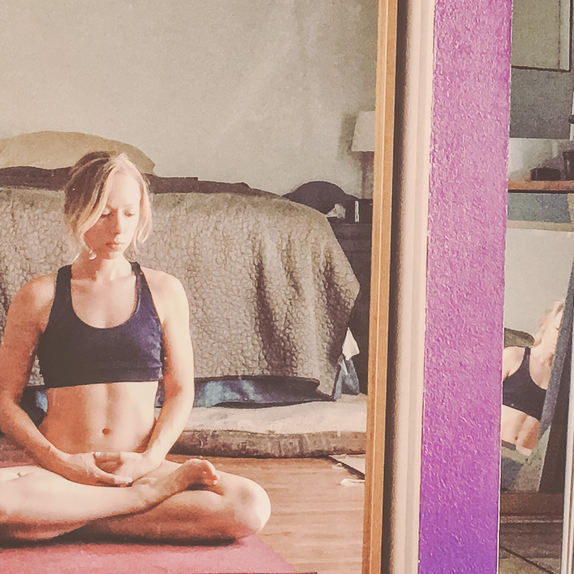
We all have seasons of our lives. We all experience ups and downs.
...
What does it mean to be in your winter?
It’s normal to experience ups and downs, highs and lows. Our resistance to the changing tides of our lives or feelings can create more problems for us and keep us stuck in the dark.
...
How to Embrace Your Winter
...
When You Willingly Enter the Dark
As you allow yourself to enter your winters, you will come to find that they will eventually lead you into the light, beauty and rebirth of a new season of spring.
...
Interested in working with Cailin?
It works through the interconnectedness of the body.
The reality is that every aspect of you is interrelated. So, through using a system of medicine that works specifically with the body (i.e. acupuncture), we can affect all levels of physiology- from cellular to muscular to hormonal to emotional and so on. Plus, treatments like acupuncture have one MAJOR benefit: it generally doesn’t have any unwanted side-effects.
Sounds too good to be true, I know.
Good Enough to be True
I was very unwell when I eventually tried acupuncture. I had no Western medical options left, but I didn’t stop searching for answers. That being said, I was HIGHLY skeptical of acupuncture.
I thought, “how can something so simple actually help me if everything else I’ve tried hasn’t?”
I had tried it all- medications, expensive imaging, thousands of dollars’ worth of supplements, and more. Even then, it took me nearly a year of being persuaded by a friend to finally try acupuncture.
After my first treatment, I got off of the table feeling different in a way I couldn't explain. I also started feeling better. Since then, acupuncture and Chinese medicine have improved my health in countless ways.
Interconnectedness 101
Let’s take a look at these two images below. In Chinese medicine, they are referred to as “sinew channels.” They are related to other terms you may have heard of: acupuncture channels, meridians, or pathways.
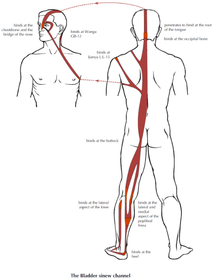 Copyright Peter Deadman from A Manual of Acupuncture | 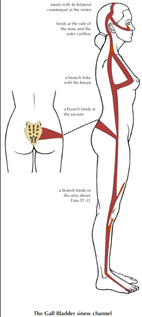 Copyright Peter Deadman from A Manual of Acupuncture |
Here's one really cool feature about working with these channels: since everything is connected, you don't have to treat the area of pain directly! In fact, some of the best places to treat back pain or sciatica aren’t located anywhere near the back. Acupuncture points in the lower legs and feet successfully treat many types of pain.
It’s Not Just About Physical Pain
One big misconception about treatments like acupuncture, cupping and massage is that they only treat physical or musculoskeletal pain. While they are effective treatments for pain, they can treat infinitely more conditions than you probably realize- anxiety, insomnia, allergies, IBS, PMS and sexual dysfunction, to name a few. There are many more pathways in the body than the ones in the images above, and they are linked to all facets of our physiology like: heart and lung function, gastrointestinal health, and brain chemistry. Much of the research around acupuncture explores these connections. Explore the web and you'll find countless studies!
Stay tuned for explanations that explore healing the emotions with body-centered medicine.
-Cailin O’Hara, MAcOM, LAc, Dipl OM

We have all experienced pain. Nearly everyone is in some kind of pain at some time... and for some of us, it just won't stop. Today we will look at one very important principle in working with our pain. This key to working with and healing our pain comes from Chinese medicine (think acupuncture and herbal medicine), what I study and practice in my clinic. There is a reason why you keep hearing or reading about acupuncture in the news and how it helps people in pain. It does! But pain doesn't just mean physical pain... we are talking pain on every level.
But how? And why? Big questions! But first…
Let’s talk about pain.
Pain is a Signal
What kind of pain do you feel?
What is it? Where do you feel it? It is from an old injury? Is it new? It is in your stomach? Your chest? Is it a result of emotions? Past abuse? Does it keep you up at night? Does it distract you from your work? Interfere with your relationships? Is it sharp or dull? Does it come and go?
Pain is an alarm alerting us that something isn’t right in some way. That sounds simple, but think about it. Pain is a signal. It is what we do with that signal that makes all the difference in our experience of our pain. And let’s be real- what we really want to do is END it, make it stop once and for all! But for those of us who have experienced pain, which I imagine is everyone, we have learned that there aren’t many quick fixes to make pain stop immediately and for good. So what can we do for ourselves? What are our options?
Pay Attention to Your Pain
First of all, we have to dial into the pain signal, really pay attention to it, and figure out what it needs in order to make it stop. Not all pain is the same, so it shouldn’t be treated in the same way. If you bang your knee on your dresser in the middle of the night, that feels a lot different than if your back aches from working long days lifting boxes, which also feels a lot different than the hurt we feel when someone betrays us. Each of these scenarios is an experience of pain, but they are vastly different, and should be treated differently. Makes sense, right?
Once we figure out the type of pain we are experiencing, we are better able to address it. This is one reason why using Chinese medicine, acupuncture and herbal medicine can be so beneficial. The treatments for pain are not one size fits all. The treatments depend entirely on what kind of pain you’re experiencing.
Why Pain Happens
The key when working with pain is to remember this: you hurt because something is blocked. Blood, circulation, hormone production, feelings, thoughts- something isn’t moving freely. Where things once flowed freely, there is now a blockage. It could be physical, like an injury to your shoulder that causes pain. It could be emotional, like persistent anxiety after a stressful experience (PTSD is an example). The idea is that something happened, some kind of impact, and where that impact occurred is where things have stopped moving properly. In Chinese medicine, we refer to this as “stagnation.” And stagnation (of many varieties) is the most commonly diagnosed condition in Chinese medicine.
So how do you treat it?
Flowing Freely Again
We have to restore movement where movement is blocked in order for pain to fade. How do we get things moving? One of the powerful effects of acupuncture is its ability to help restore flow and balance in the body. For instance, your chronic neck ache can be alleviated with acupuncture because it helps to clear up the stiffness and congestion that are causing your neck to hurt. Your grief that sits in your chest and weighs you down can be alleviated with acupuncture because it helps to move what has become stuck.
Pain makes us feel stuck, like we can’t move freely, like we can’t live our lives in the ways that we want. It feels like our pain is holding us back. THAT is stagnation. We have all felt it in some way, probably many ways and many times. When it doesn’t go away on its own, when we can’t un-stick ourselves, that’s when the power of Chinese medicine can really come to our aid and help us flow freely again.
Feel free to email us with questions or comments. And stay tuned for part two!
-Cailin O’Hara, MAcOM, LAc, Dipl OM
The Best Road to Take

I have a great respect and an abundance of gratitude for Western medicine. I grew up in a family of nurses, and I worked in the veterinary field (including emergency medicine) for 6 years. I even considered a career as a nurse practitioner before I decided on Chinese medicine. The life-saving capabilities and the incredible advancements in Western medicine and its technologies are often nothing short of miraculous. More than likely, we all know someone who survived an illness or injury through the use of Western medicine. I surely have, and I surely do. I think it's not so much about Western vs. Eastern medicines... it's more knowing the best road to take and when to take it. In fact, these very different medical approaches can work best when they are used together. Teamwork... it makes things better. Go figure. :)
So...what is the Chinese medicine approach about?
Getting to the Roots
Chinese medicine works with “roots” and “branches,” like that of a tree. Symptoms are like the branches- they are what you can most easily see/experience (for example, headaches). What we work toward treating in Chinese medicine is the main cause of the symptoms- these are the roots. We, of course, address the branches/symptoms, but if we don't get to the roots, the problem will mostly likely not resolve.
So, let's take a look at the tree. Why are the leaves discolored? Why is the bark spotted? Why won't it grow? There is something wrong. We can remove the leaves, or perhaps spray the bark with chemicals in the spotted areas, but will that solve the problem? What about the environment that the tree is growing in? What about the soil that the tree is rooted in and pulling its nutrients from? What about the tree's early years… what was happening as it was growing in the environment around it? Were there droughts or floods?
More than Meets the Eye
While this is a simplistic model, it is an easy way of describing how holistic medicine views well-being: there is more than meets the eye, and everything is connected. It requires critical thinking by analyzing groups of symptoms, not isolating one symptom and treating it solely. For instance, if you have dry eyes, you can apply eye drops every day. Your eyes will always be dry without them. The drops don’t correct the problem that’s causing the dryness, they simply add moisture.
Let's use dryness as an example. In Chinese medicine, we are most concerned with what is causing the symptom of dryness (the branches, so to speak). Often, we find other similar symptoms in the body- perhaps your skin or hair is dry, too; perhaps you experience photophobia (sensitivity to light); perhaps you have trouble sleeping at night; perhaps you suffer from constipation or acid reflux; perhaps you have trouble concentrating. We take what may seem like unrelated aspects of your physiology, overall health and even mood, and we group them together through a complex, centuries-old system of diagnosis (Chinese medical theory). From there, we can work toward treating the root cause of the symptom(s).
The Big Picture of You
So, we would help to resolve the dryness in your eyes, for example, but do so through treating a much larger scope of your health and well-being. With treatment, you may then also notice improvements in sleep, digestion, concentration, energy, and the like. This is because we are integrated beings. All aspects of our being are connected. Our mental health affects our entire health. Our digestive health affects our entire health. Even our physical pain is connected to all of this. So, through investigating all body systems, Chinese medicine enables a practitioner to see the big picture of you, the patient, and put it all together to provide treatment that works.
This is why I practice (and love/revere/am constantly amazed by) Chinese medicine-
it works. It allows me to utilize both ancient and modern medicine to truly help other people heal… and heal deeply. I'm the kind of person that needs answers. I don't like when I can't tell a story about why something is happening in regard to health. If we can't put things in context, we can’t find meaning in them. So, why does something hurt? Why does something not work properly? I can often find the answers through the medicine that I practice. Even better, I can then utilize safe, effective, gentle and enduring treatments that work. As a career, a passion, and a life-long commitment, Chinese medicine has been one of my greatest blessings, and I am privileged and honored to share it with you.
-Cailin O'Hara, MAcOM, LAc, Dipl OM
Sun Tree Healing Arts, LLC
Author
Dr. Cailin O'Hara, DACM, Dipl OM, LAc, is a nationally board certified Doctor of Chinese Medicine and Acupuncture, intuitive and coach. She is based in Phoenix, AZ, and works with clients worldwide.
Archives
March 2022
August 2020
April 2020
March 2020
October 2019
August 2019
July 2019
June 2019
May 2019
April 2019
March 2019
February 2019
January 2019
November 2018
October 2018
September 2018
May 2018
April 2018
January 2018
December 2017
November 2017
October 2017
September 2017
April 2017
March 2017
January 2017
Categories
All
Acupuncture
Anxiety
Back Pain
Chinese Medicine
Chronic Pain
Cosmetic Acupuncture
Cupping
Depression
Does Acupuncture Hurt?
Eating Disorders
Emotional Trauma
Empowerment
Energy Healing
Facial Rejuvenation
FAQs
Fatigue
Fear
Fibromyalgia
Food
Grief
Healing
Intention
Intuition
Journaling
Law Of Attraction
Letting Go
Meditation
Neck Pain
Nutrition
Pain
Panic Attacks
PTSD
Recipes
Sciatica
Self Care
Self-Care
Self-Esteem
Self Love
Skin Care
Stress
Truth
 RSS Feed